
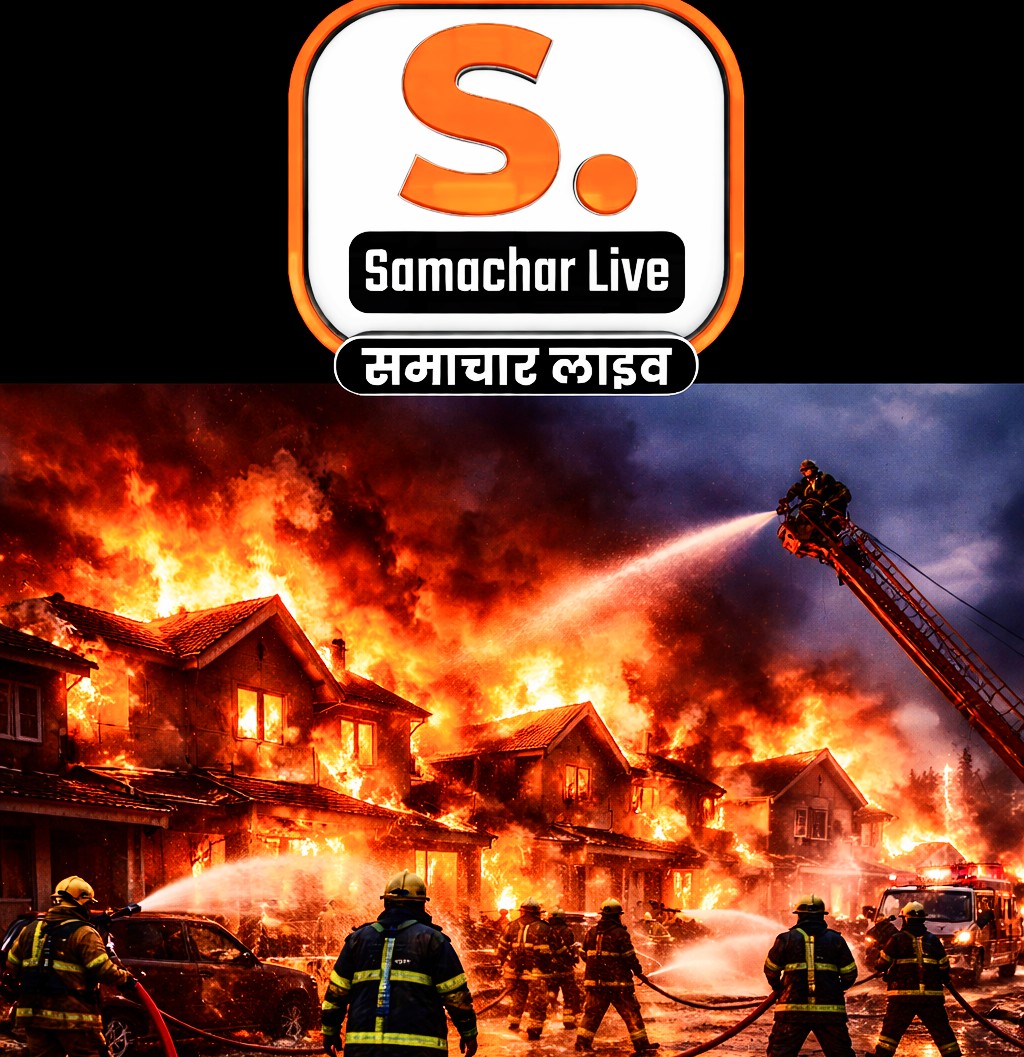

Srinagar, Feb 9: Downtown Srinagar, known for its narrow lanes, dense housing, and limited road accessibility, remains one of the most vulnerable zones during fire emergencies. In such congested localities, fire hydrants play a critical role during firefighting operations, where fire tender movement is severely restricted.
In congested localities such as Nowhatta, where fire tender movement is severely restricted, fire hydrants are crucial for effective firefighting. However, recent fire incidents in the area have highlighted alarming shortcomings in water availability and hydrant readiness.
Recent fire incidents in Nowhatta have exposed serious shortcomings in emergency preparedness. Several houses were reduced to ashes after firefighters struggled to control the blaze due to absence of water and adequate pressure in fire hydrants.
During operations, multiple fire hydrants were found completely dry, while others had negligible pressure, making it extremely difficult for fire personnel to douse flames in time. The fire spread rapidly through the congested residential cluster, causing extensive property damage and leaving several families homeless.
Addressing a press conference, Deputy Director Fire and Emergency Services, Dr. Mir Aqib Hussain, made a strong statement directly blaming water supply failures for preventable tragedies.
While Fire and Emergency Services installs and maintains fire hydrants across Srinagar, the responsibility of supplying water and maintaining pressure lies with the Jal Shakti (PHE) Department, he stated.
“We maintain the hydrants, but they fail to fill them,” Dr. Hussain said, adding that such lapses turn manageable fire incidents into large-scale tragedies, especially in downtown areas where hydrants are often the only viable water source.
He emphasised that in downtown where narrow lanes and house congestion leave little room for fire engines, functional hydrants are essential. “Any failure in water supply during emergencies directly translates into loss of property and potential risk to lives.”
PHE’s Response: Proposals Instead of Solutions:
When contacted by Rising Kashmir, Superintending Engineer PHE, Anbreena Anjum, acknowledged water supply limitations but offered future proposals rather than immediate solutions.
“There is no 24×7 water supply during night hours in Downtown due to limited storage capacity, as water is sourced from Nishat. Night-time supply takes significant time to reach the area, defeating the purpose of fire hydrants,” Anjum stated.
She added that PHE has “proposed” emergency borewells and is “considering” a separate dedicated pipeline from the treatment plant with 24×7 supply, as availability in the existing system “cannot be guaranteed.”
The response raises questions: If PHE knows availability “cannot be guaranteed” and night-time supply “defeats the purpose,” why has no emergency action been taken? Why are solutions still “proposed” when families have lost homes?
The contrast between departments is damning. Fire Services maintains hydrants, trains personnel, responds within minutes. PHE acknowledges it cannot guarantee water supply—and offers only vague proposals.
Nowhatta fires illustrate tragic consequences. Firefighters arrived quickly, connected to hydrants they maintain, only to find them dry. They watched helplessly as flames consumed homes, knowing adequate water pressure could have contained the blaze.
Families are homeless not because fires are unstoppable, but because PHE failed to ensure water reaches life-saving infrastructure.