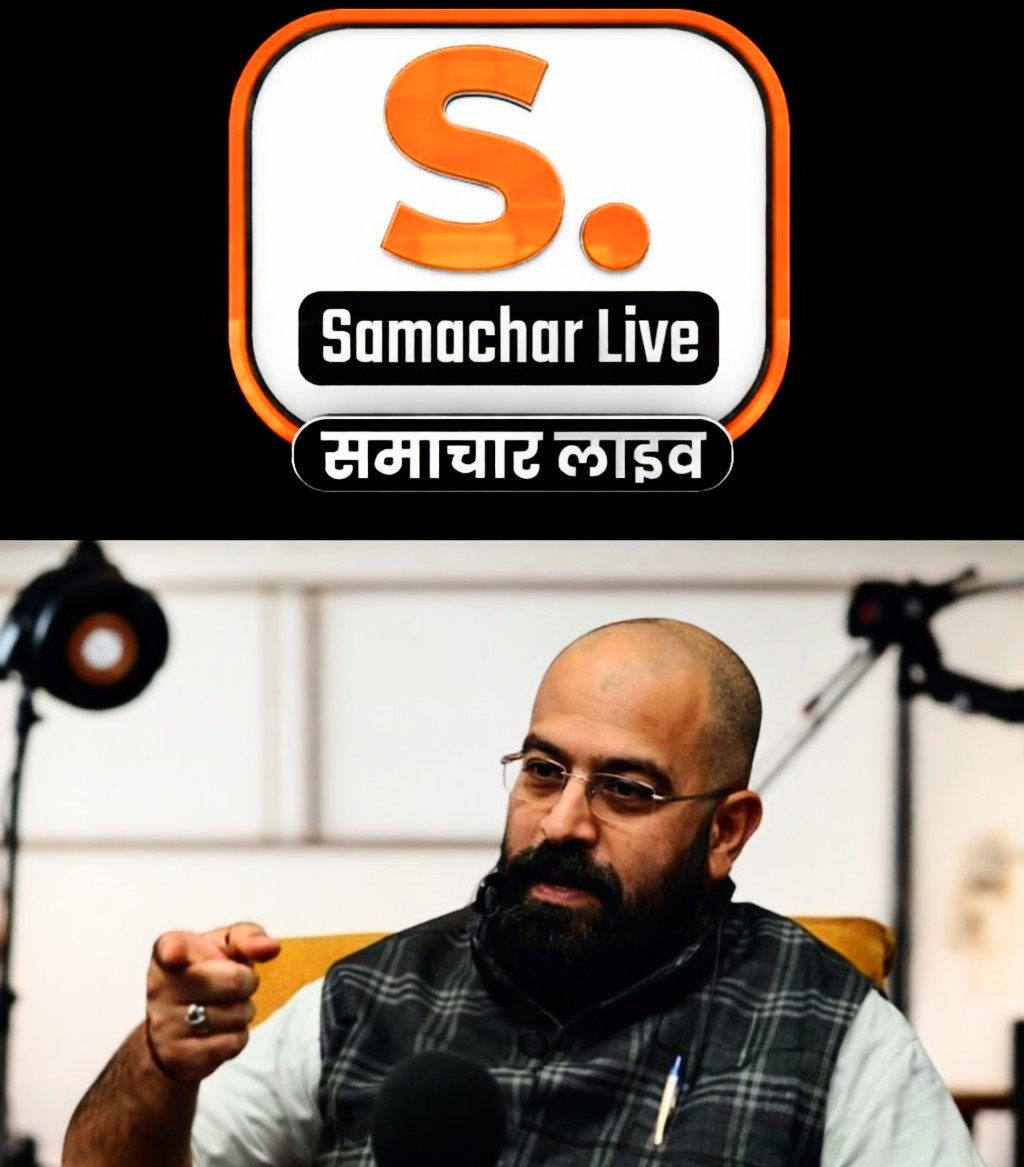

By Dr Firdous Baba (Chief, Kashmir Sewa Sangh)
The initial idea behind affirmative action was not to create a policy that would last forever and exclude certain groups. Instead, it was a constitutional measure aimed at redressing historical wrongs while still relying on merit as one of the factors in the recruitment process; thus, combining excellent efficiency in the workplace with better human relations in society. In the case of Jammu and Kashmir, such a delicate balance has been severely disrupted. The present-day scenario has shifted from a situation of benefits to one of inadvertent demographic and regional closure, with the “Open Merit” category emerging as a tiny island amidst a sea of unfairly distributed quotas.
As a representative of the Kashmir Sewa Sangh, I stood by the students and candidates throughout the Union Territory, particularly in the Srinagar district, whose opinions are often overlooked in the vague policy discussions. The information becoming available through official government responses in the Jammu and Kashmir Assembly is not just a number; it is a strong signal of the deep-rooted problem of partiality in administration.
Analysis of Regional Disparities in Social Certification
The most recent information released by the Revenue Department regarding the issuance of category certificates from April 2023 to date reveals a significant disparity between regions. In the Scheduled Caste (SC) category, 67,112 certificates were issued in the Jammu division, where the Kashmir division reported no certificates at all. Likewise, the allocation in the Actual Line of Control (ALC) and International Border (IB) categories is heavily biased towards Jammu, which holds approximately 94% and 100% of these certificates, respectively.
The people of the Kashmir division suffer greatly through this loss of access to the state’s welfare framework. The difference remains significant, even in the ST and EWS categories, with Jammu receiving approximately 85% and 92% of the certificates in those categories, respectively. RBA may seem to have a fairer distribution, but in reality, Kashmir holds around 67% of the certificates, and this does not take into account the Valley’s population. If we consider the population size, we will see that even this category has underrepresentation. For the young people of Srinagar, who live in an entirely urban capital district with no access to RBA, ALC, or IB quotas, “Open Merit” is their only chance—a chance that is being slowly but surely taken away from them.
The Erosion of Merit: A Case Study in Professional Recruitment
These imbalances have had grave consequences, as evident in the results of recent recruitment processes, such as the Junior Engineer (JE) Civil and JK Police Sub-Inspector (JKPSI) exams. In the JKPSI recruitment to fill 1,200 positions, the share of “Open Merit”, which had already been decreased from the historical 50% was further increased with an unprecedented concentration of benefits. Among the 600 seats reserved for specific categories, an astonishing 87.16% went to aspirants from the Jammu division, while Kashmir was left with only 12.83%.
The JE Civil results revealed a harsh pattern of exclusion discrimination. From a total of 855 posts, the whole SC quota of 68 was filled only by candidates of the Jammu division. Probably, the difference in qualifying benchmarks is the most upsetting situation for the candidates. In several cases, “Open Merit” candidates had to score more than 108 marks out of 150 to qualify, whereas candidates from the reserved categories were accepted with scores of 59 or 65. When the threshold for open competition is kept very low, it is only the high-scoring candidates from the reserved categories who “migrate” to the open pool, thereby causing further displacement of General Category aspirants who have no other option. For a student in Srinagar, who has been preparing for years through the educational disruptions, 85 can mean no job, while 62 in another place guarantees a job. This situation indicates a lack of social justice; rather, it is a structural measure that undermines the quality.
The Crisis of Administrative Continuity
The recruitment situation in Jammu and Kashmir is currently marked by an alarming disconnection between policy reforms and their implementation. At the beginning of January 2026, the Jammu and Kashmir (J&K) Cabinet had already given the green light for the “rationalisation of reservations,” which is considered a step toward reopening the Open Merit share to 50% by adjusting the EWS and RBA quotas. However, the proposal is still pending a final announcement from the Lieutenant Governor’s office, and the government is proceeding with massive recruitments that include more than 1,815 Executive Constable postings.
Moving forward with the mass recruitments based on a policy framework that the government has officially recognised as requiring correction is both ethically and administratively indefensible. The moment the selections are done, the structural imbalances will be perpetuated for decades. As the harm becomes irreversible, any subsequent rationalisation will only have the effect of being a symbolic act. In reality, we are depriving an entire generation of fair competition while the remedy is just a signature away.
A Framework for Rationalisation and Reform
The Kashmir Sewa Sangh, along with aspirants from the General Category, is not asking for the complete abolition of affirmative action, but rather for its rationalisation. A policy that unfairly impacts one area or group of people is likely to be perceived as reverse discrimination, which can lead to social alienation and negative perceptions towards the government among the affected individuals.
Immediate “statesmanship” and dedication to the following principles are the requirements for a way forward:
1. Immediate Moratorium: All ongoing recruitments, particularly the 1,815 Constable posts, should be halted immediately until the rationalised reservation policy is announced.
2. Proportional Representation: Strictly based on the exact population statistics of the Union Territory, reservation quotas should be drawn in such a way that no area or segment can take over the welfare system.
3. Restoration of Meritocratic Space: The “Open Merit” threshold should be set at a level that would give the bulk of the population, who do not come under any class, a chance at a job that is fair and realistic.
The young people of Srinagar and students from the general category throughout Jammu and Kashmir are not demanding special treatment; they want their fate not to be decided by their location and the delays in administrative channels. Trust in institutions cannot be maintained merely by giving assurances; it must be based on the presentation of fairness and transparency. If we continue to regard merit as a residual category, we may face a situation of “brain drain” that would be detrimental to the future of Jammu and Kashmir. The time has come for the administration to match its actions with the proclaimed objectives of equity and social justice.
_Dr Firdous Baba is the Founder and Chairman of the Kashmir Sewa Sangh and a prominent advocate for youth leadership and social justice in Srinagar.